
Chronic Stress and Cellular Health: How Botanical Compounds Support Your Body's Resilience


We all know that stress doesn't feel good — but what many people don't realise is just how deeply chronic stress reaches into the body, all the way down to the cellular level. When stress becomes a constant companion rather than an occasional visitor, it sets off a cascade of biological changes that can undermine your energy, your immune defences, and even the rate at which your cells age. The good news? Nature has equipped certain plants with remarkable compounds that may help support your body's ability to cope and recover.
What Happens to Your Cells Under Chronic Stress
When you experience stress, your body activates the hypothalamic-pituitary-adrenal (HPA) axis, triggering a flood of cortisol and other stress hormones. In short bursts, this is perfectly healthy — it's your fight-or-flight system doing its job. But when stress becomes chronic, cortisol levels remain persistently elevated, and the downstream effects on your cells are significant.[1]
One of the most striking findings in stress biology is the impact on telomeres — the protective caps at the ends of your chromosomes. Landmark research by Dr. Elizabeth Blackburn (who won the Nobel Prize for her work on telomerase) showed that chronic psychological stress is associated with shorter telomeres and reduced telomerase activity, effectively accelerating the biological clock at the cellular level.[2] In other words, chronic stress doesn't just make you feel older — it may actually make your cells age faster.
Elevated cortisol also promotes oxidative stress, a state in which reactive oxygen species (ROS) overwhelm the body's antioxidant defences. This oxidative burden damages proteins, lipids, and DNA within cells, contributing to a cycle of inflammation and cellular dysfunction.[3]
The Stress–Inflammation–Immunity Connection
Chronic stress doesn't just affect individual cells in isolation — it reshapes the entire immune landscape. A comprehensive meta-analysis spanning 30 years of research found that prolonged stress suppresses beneficial immune functions while simultaneously promoting low-grade systemic inflammation.[4] This paradox — a weakened yet over-activated immune system — is at the heart of many modern health challenges.
The mechanism involves NF-κB, a key signalling molecule that acts as a master switch for inflammatory gene expression. Chronic stress activates NF-κB pathways, leading to increased production of pro-inflammatory cytokines like IL-6 and TNF-α.[5] If you've read the recent deep dive on ebc46.health about NF-κB suppression and PKC activation, you'll appreciate just how central this pathway is to cellular health — and why compounds that help modulate it are generating so much scientific interest.
This stress-driven inflammation doesn't stay neatly contained. It can affect energy metabolism, sleep quality, skin clarity, and even cognitive function — which is why people under chronic stress often report feeling simultaneously exhausted and wired, with visible signs of ageing appearing more quickly than expected.
How Botanical Polyphenols Support Cellular Resilience
Plants have evolved an extraordinary chemical defence system over hundreds of millions of years. The polyphenols, flavonoids, and terpenes they produce serve as protection against UV radiation, pathogens, and oxidative damage — and when we consume these compounds, our cells can benefit from that same protective chemistry.[6]
Research has shown that plant polyphenols support cellular health through several complementary mechanisms. They contribute to the body's antioxidant defences, helping to neutralise the excess ROS generated under stress. They also help modulate inflammatory signalling pathways, including the NF-κB cascade mentioned above. And some polyphenols have been shown to support mitochondrial function — the energy-producing organelles within every cell — which is particularly relevant when chronic stress depletes cellular energy reserves.[7]
The Blushwood Berry (Fontainea picrosperma), native to the rainforests of Far North Queensland, Australia, is one of the most phytochemically complex fruits studied in recent years. Its seeds contain EBC-46 (tigilanol tiglate) along with a rich profile of complementary compounds. While much of the clinical research on EBC-46 has focused on its interactions with protein kinase C (PKC) signalling, the broader polyphenol profile of Fontainea picrosperma may contribute to the overall cellular support that users of Blushwood Berry extract report experiencing.
Real-World Experiences: What Customers Are Saying
While laboratory science provides the foundation, the experiences of real people bring the story to life. Among Blushwood Health customers, a recurring theme is the sense of renewed vitality and resilience.
Kim Sandquist, a verified Trustpilot reviewer, shared: "I feel stronger and healthier since starting Blushwood Health capsules! I have been taking it for 4 months and my immune system is optimal!" Another customer, Kianna Lyneborg, noted: "I'm using the capsules for inflammation and they've helped tremendously." And M.J. from New Zealand reported: "I started to have more energy, my appetite was improving, and these things all improved the longer I took Blushwood."
Individual results may vary. These testimonials reflect personal experiences and are not intended as medical claims. However, these accounts are consistent with the emerging science around how botanical polyphenols support the body's natural stress-response and recovery systems.
Practical Strategies for Supporting Cellular Health Under Stress
While no single supplement is a substitute for addressing the root causes of chronic stress, there are evidence-based strategies that can support your body's resilience at the cellular level:
Prioritise sleep. During deep sleep, your body activates critical cellular repair processes, including DNA repair and immune cell regeneration. Aim for 7–9 hours of quality sleep per night. If you struggle with sleep, consider that some Blushwood Health customers have noted improved overall vitality when taking their supplement consistently — which may indirectly support better rest.
Move your body regularly. Moderate exercise has been shown to reduce systemic inflammation, support mitochondrial biogenesis, and even help maintain telomere length.[8] You don't need intense workouts — even 30 minutes of daily walking makes a measurable difference.
Nourish with polyphenol-rich foods. Berries, green tea, dark chocolate, and colourful vegetables all provide cellular-protective polyphenols. Supplementation with concentrated botanical extracts — such as those derived from Fontainea picrosperma — can complement a polyphenol-rich diet, especially during periods of heightened stress.
Practice mindful stress reduction. Research shows that mindfulness practices can measurably reduce inflammatory markers and support immune function.[9] Even five minutes of focused breathing can help shift your nervous system from sympathetic (stress) to parasympathetic (recovery) mode.
Supporting Your Resilience with Blushwood Health
At Blushwood Health, we offer two convenient ways to incorporate Fontainea picrosperma extract into your daily wellness routine:
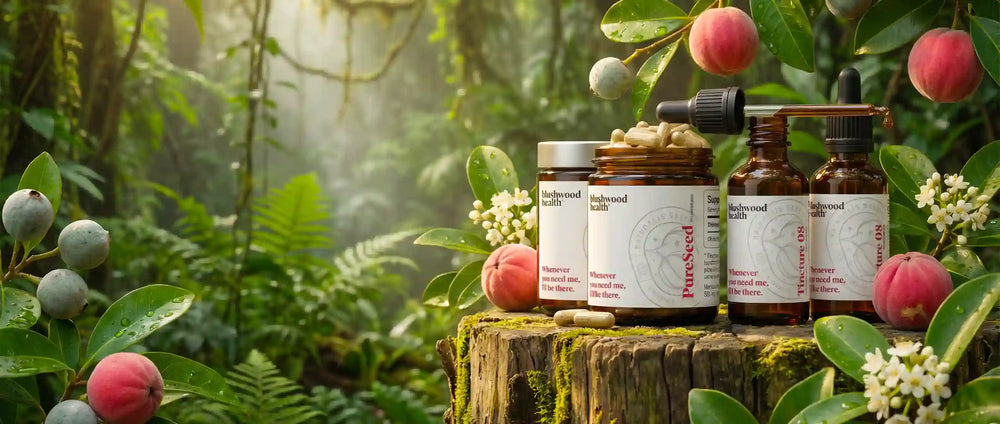
Tincture 08 — our liquid tincture, taken sublingually (under the tongue) for rapid absorption. Many customers prefer the tincture for its fast-acting delivery and ease of use. Simply place drops under the tongue, hold for 30–60 seconds, and swallow.
PureSeed Capsules — our 60-count capsule option, perfect for those who prefer the convenience and precision of a capsule format. Each batch is lab-tested for purity and potency.
Both products are crafted from sustainably sourced Blushwood Berry seeds, and every batch undergoes rigorous third-party lab testing. Whether you choose the tincture or capsules, you're giving your body access to the full spectrum of botanical compounds that Fontainea picrosperma has to offer.
Frequently Asked Questions
How does chronic stress affect cellular ageing?
Chronic stress elevates cortisol levels, which increases oxidative stress and shortens telomeres — the protective caps on chromosomes. Research has shown that prolonged psychological stress is associated with accelerated telomere shortening, effectively speeding up the biological ageing process at the cellular level.
What are polyphenols and how do they support the body during stress?
Polyphenols are naturally occurring plant compounds with antioxidant properties. They help neutralise reactive oxygen species (ROS), modulate inflammatory signalling pathways like NF-κB, and support mitochondrial function. These mechanisms are particularly beneficial during periods of chronic stress, when oxidative damage and inflammation tend to increase.
What is EBC-46 and where does it come from?
EBC-46, also known as tigilanol tiglate, is a naturally occurring compound found in the seeds of the Blushwood Berry (Fontainea picrosperma), a tree native to the rainforests of Far North Queensland, Australia. It has been the subject of significant scientific research for its interactions with protein kinase C (PKC) signalling pathways.
Should I take Tincture 08 or PureSeed Capsules?
Both products contain the same high-quality Fontainea picrosperma extract. Tincture 08 is taken sublingually for faster absorption and flexible dosing, while PureSeed Capsules offer convenient, pre-measured doses. Many customers choose based on lifestyle preference — some even use both depending on the situation.
Can botanical supplements replace medical treatment for chronic stress?
No. Botanical supplements are intended to complement a healthy lifestyle, not replace medical care. If you are experiencing chronic stress that affects your daily life, please consult a qualified healthcare professional. Supplements like Blushwood Berry extract may support your body's natural resilience, but they are not a substitute for professional medical advice or treatment.
Riferimenti
- McEwen BS. Protective and damaging effects of stress mediators. N Engl J Med. 1998;338(3):171-179. doi:10.1056/NEJM199801153380307. ↩
- Epel ES, Blackburn EH, Lin J, et al. Accelerated telomere shortening in response to life stress. Proc Natl Acad Sci U S A. 2004;101(49):17312-17315. doi:10.1073/pnas.0407162101. ↩
- Aschbacher K, O'Donovan A, Wolkowitz OM, et al. Good stress, bad stress and oxidative stress: insights from anticipatory cortisol reactivity. Psychoneuroendocrinology. 2013;38(9):1698-1708. doi:10.1016/j.psyneuen.2013.02.004. ↩
- Segerstrom SC, Miller GE. Psychological stress and the human immune system: a meta-analytic study of 30 years of inquiry. Psychol Bull. 2004;130(4):601-630. doi:10.1037/0033-2909.130.4.601. ↩
- Slavich GM, Irwin MR. From stress to inflammation and major depressive disorder: a social signal transduction theory of depression. Psychol Bull. 2014;140(3):774-815. doi:10.1037/a0035302. ↩
- Pandey KB, Rizvi SI. Plant polyphenols as dietary antioxidants in human health and disease. Oxid Med Cell Longev. 2009;2(5):270-278. doi:10.4161/oxim.2.5.9498. ↩
- Rahman I, Biswas SK, Kirkham PA. Regulation of inflammation and redox signaling by dietary polyphenols. Biochem Pharmacol. 2006;72(11):1439-1452. doi:10.1016/j.bcp.2006.07.004. ↩
- Werner C, Fürster T, Widmann T, et al. Physical exercise prevents cellular senescence in circulating leukocytes and in the vessel wall. Circulation. 2009;120(24):2438-2447. doi:10.1161/CIRCULATIONAHA.109.861005. ↩
- Black DS, Slavich GM. Mindfulness meditation and the immune system: a systematic review of randomized controlled trials. Ann N Y Acad Sci. 2016;1373(1):13-24. doi:10.1111/nyas.12998. ↩
These statements have not been evaluated by the Food and Drug Administration. This product is not intended to diagnose, treat, cure, or prevent any disease.