
EBC-46 and Joint Health: How Blushwood Berry Extract Supports Your Body's Inflammation Response
Learn how EBC-46 from Blushwood Berry (Fontainea picrosperma) supports joint health and your body's natural inflammation response, backed by emerging botanical research.

If you've ever felt that familiar morning stiffness in your knees or noticed your hands protesting after a long day of typing, you're far from alone. Joint discomfort is one of the most common wellness concerns worldwide, and it tends to become more persistent as we age. But here's what many people don't realise: the foods and botanical compounds you consume every day may play a far more significant role in joint comfort than you think. A growing body of peer-reviewed research points to polyphenols — the colourful, protective compounds found in plants — as powerful allies in supporting healthy inflammatory responses and maintaining the cartilage that cushions your joints.[1]
Understanding Inflammation: Your Body's Double-Edged Sword
Inflammation is one of your body's most essential protective mechanisms. When you stub your toe or catch a cold, your immune system triggers an inflammatory response to begin the healing process. This acute, short-lived inflammation is a sign that your body is working exactly as it should. The challenge arises when inflammatory signalling becomes chronic — persisting at low levels for weeks, months, or even years without a clear trigger.
Chronic, low-grade inflammation can gradually affect joint tissue, contributing to stiffness, reduced mobility, and general discomfort. At the molecular level, much of this process is orchestrated by a protein complex called NF-κB (nuclear factor kappa-light-chain-enhancer of activated B cells). When NF-κB is persistently activated, it drives the expression of pro-inflammatory cytokines — signalling molecules like IL-6 and TNF-α that amplify the inflammatory cascade in joint tissue.[2] This is where botanical polyphenols enter the picture, offering a natural way to support your body's ability to maintain balanced inflammatory responses.
How Polyphenols Support Joint Comfort at the Cellular Level
Polyphenols are a diverse family of over 8,000 naturally occurring compounds found in fruits, vegetables, tea, and botanical extracts. What makes them particularly relevant to joint health is their well-documented ability to modulate inflammatory signalling pathways. A landmark systematic review and meta-analysis of 47 randomised controlled trials found that dietary polyphenol supplementation was associated with improvements in inflammatory markers, including C-reactive protein (CRP) and erythrocyte sedimentation rate (ESR), without increasing adverse events.[3]
At the cellular level, polyphenols appear to work through several complementary mechanisms. They help limit the translocation of p65 — a key subunit of NF-κB — into the cell nucleus, effectively dampening the overproduction of inflammatory signalling molecules.[4] Research on pomegranate-derived polyphenols, for example, demonstrated their ability to suppress NF-κB activation and IL-6 expression in human chondrocytes (the specialised cells that maintain cartilage), pointing to a direct chondroprotective effect.[5]
What's especially encouraging is the synergy observed between different polyphenolic compounds. A study published in Arthritis Research & Therapy found that curcumin and resveratrol together produced chondroprotective effects greater than either compound alone, inhibiting IL-1β-induced NF-κB-mediated inflammation and apoptosis in human articular chondrocytes.[6] This synergistic principle is a core reason why whole-plant extracts — which naturally contain multiple polyphenolic compounds — may offer advantages over isolated single molecules.
From the Rainforest to Your Joints: The Blushwood Berry Connection
Among the world's most fascinating botanical sources of bioactive compounds is Fontainea picrosperma, commonly known as the Blushwood Berry tree. Native to the rainforests of Far North Queensland, Australia, this remarkable tree produces seeds rich in a unique compound called EBC-46 (tigilanol tiglate). While much of the published research on EBC-46 has focused on its interaction with protein kinase C (PKC) pathways — particularly the classical PKC-βI and PKC-βII isoforms — these same pathways are deeply involved in cellular inflammatory signalling.[7]
PKC enzymes act as molecular switches in your cells, regulating processes from immune activation to tissue repair. The ability of compounds from Fontainea picrosperma to selectively interact with specific PKC isoforms is what makes Blushwood Berry extract so distinctive in the botanical world. For a deeper exploration of PKC translocation and how epoxytiglianes like EBC-46 drive enzyme redistribution at the cellular level, the research team at has published detailed scientific reviews well worth reading.
Beyond EBC-46, the Blushwood Berry seed contains a broader spectrum of phytochemicals — including additional epoxytiglianes and polyphenolic compounds — that contribute to its overall botanical profile. This full-spectrum richness is why extracts that preserve the seed's natural chemical diversity may offer more comprehensive support than isolated compounds alone.
Practical Steps to Support Your Joints Naturally
Supporting joint health doesn't require a complete lifestyle overhaul. Small, consistent choices can make a meaningful difference over time. Incorporating polyphenol-rich foods into your daily routine is one of the simplest and most evidence-supported strategies available. Berries (especially blueberries and blackberries), pomegranates, green tea, extra virgin olive oil, and turmeric are all excellent dietary sources of joint-supporting polyphenols.[1]
Gentle, regular movement helps maintain synovial fluid circulation — the natural lubricant that keeps your joints moving smoothly. Activities like walking, swimming, and yoga support joint mobility without placing excessive stress on cartilage. Adequate hydration also plays an underappreciated role, as synovial fluid is largely water-based.
For those looking for more concentrated botanical support, high-quality supplements can bridge the gap between dietary intake and the levels of polyphenols studied in clinical research. When choosing a supplement, look for products that use whole-seed or full-spectrum extracts, are independently lab-tested, and clearly disclose their sourcing and extraction methods. A 2019 exploratory clinical trial found that polyphenol-enriched serum — the blood fraction collected after participants consumed a polyphenol extract — demonstrated measurable chondroprotective properties when applied to cartilage cells in vitro, suggesting that orally consumed polyphenols can reach joint tissue in bioactive concentrations.[8]
Supporting Your Wellness Journey with Blushwood Health
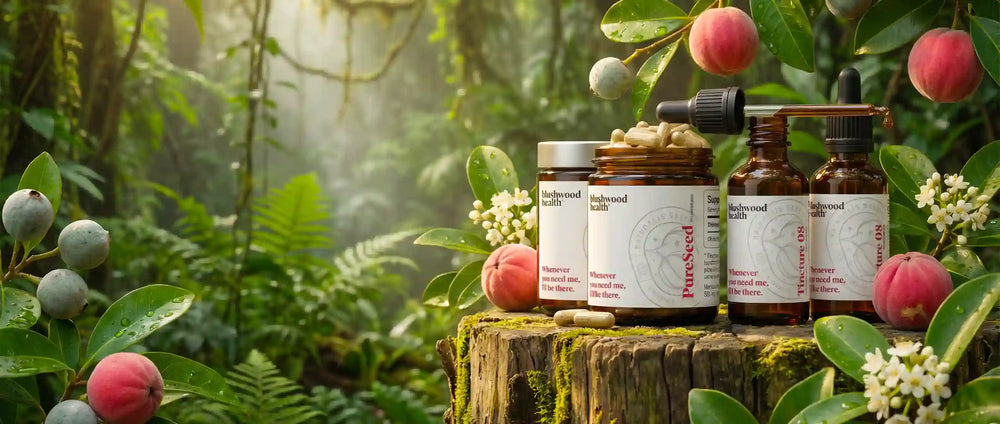
At Blushwood Health, we believe that nature offers some of the most elegant solutions for everyday wellness. Our Tincture 08 delivers Blushwood Berry seed extract in a liquid format that can be used both orally (sublingually, under the tongue) for quick absorption and topically applied to the skin. For those who prefer the convenience of capsules, our PureSeed capsules (90 count) offer the same full-spectrum extract in an easy-to-take daily format.
Both products are crafted from sustainably sourced Fontainea picrosperma seeds and independently lab-tested to ensure purity and potency. Whether you're looking to support healthy inflammatory responses, promote joint comfort, or simply invest in your long-term cellular wellbeing, Blushwood Berry extract offers a unique botanical approach rooted in both traditional knowledge and modern science.
Frequently Asked Questions
How do polyphenols help support joint health?
Polyphenols are plant-based compounds that help maintain healthy inflammatory responses in the body. Research shows they can modulate the NF-κB signalling pathway, which plays a central role in the inflammatory process affecting joints. By supporting balanced inflammatory signalling, polyphenols contribute to overall joint comfort and function.
What is the NF-κB pathway and why does it matter for joints?
NF-κB (nuclear factor kappa-light-chain-enhancer of activated B cells) is a protein complex that controls the expression of genes involved in inflammation. When overactivated, it can contribute to prolonged inflammatory responses in joint tissue. Polyphenols from botanical sources have been studied for their ability to help maintain balanced NF-κB activity.
Can EBC-46 from Blushwood Berry support joint comfort?
EBC-46, a compound found in the seeds of Fontainea picrosperma (the Blushwood Berry tree), interacts with protein kinase C (PKC) pathways, which are involved in cellular signalling and inflammatory responses. While research into EBC-46 is ongoing, its unique interaction with PKC isoforms suggests potential relevance to maintaining healthy inflammatory balance.
What foods are rich in joint-supporting polyphenols?
Berries, pomegranates, green tea, turmeric, grapes, and extra virgin olive oil are all excellent sources of polyphenols studied for joint health. Concentrated botanical extracts, including those from rainforest berries like the Blushwood Berry, can deliver higher levels of specific beneficial compounds.
References
- Ferretti F, Castagnoli R, Ferretti ME, Pengo MF, Vailati A. "Overview of Anti-Inflammatory and Anti-Nociceptive Effects of Polyphenols to Halt Osteoarthritis: From Preclinical Studies to New Clinical Insights." Int J Mol Sci. 2022;23(24):15861. doi:10.3390/ijms232415861. PMID: 36555503
- Ansari MY, Ahmad N, Haqqi TM. "Effect of Dietary Polyphenols on Osteoarthritis—Molecular Mechanisms." Life (Basel). 2022;12(3):436. doi:10.3390/life12030436. PMID: 35330187
- Oliviero F, Guillen I, Ferro E, Ramonda R, Scanu A, Sfriso P, Punzi L, Dayer JM. "Efficacy and safety of dietary polyphenols in rheumatoid arthritis: A systematic review and meta-analysis of 47 randomized controlled trials." Clin Nutr. 2023;42(5):159–168. PMID: 37033930
- Shakoor H, Feehan J, Apostolopoulos V, Platat C, Al Dhaheri AS, Ali HI, Ismail LC, Bosevski M, Stojanovska L. "Exploring the role of polyphenols in rheumatoid arthritis." Crit Rev Food Sci Nutr. 2022;62(1):159–169. PMID: 33998910
- Zhuang Z, Ye G, Huang B. "A Polyphenol-rich Pomegranate Fruit Extract Suppresses NF-κB and IL-6 Expression by Blocking the Activation of IKKβ and NIK in Primary Human Chondrocytes." Phytother Res. 2017;31(5):758–765. PMID: 28276100
- Csaki C, Mobasheri A, Shakibaei M. "Synergistic chondroprotective effects of curcumin and resveratrol in human articular chondrocytes: inhibition of IL-1beta-induced NF-kappaB-mediated inflammation and apoptosis." Arthritis Res Ther. 2009;11(6):R165. PMID: 19889203
- Boyle GM, D'Souza MMA, Pierce CJ, Adams RA, Callaghan B, Reddell PW, Parsons PG. "Activation of PKC supports the anticancer activity of tigilanol tiglate and related epoxytiglianes." Sci Rep. 2021;11(1):207. PMID: 33420238
- Oliviero F, Zamudio-Cuevas Y, Belluzzi E, Andretto L, Scanu A, Favero M, Ramonda R, Dayer JM, López-Reyes A, Punzi L. "Chondroprotective Properties of Human-Enriched Serum Following Polyphenol Extract Absorption: Results from an Exploratory Clinical Trial." Nutrients. 2019;12(1):82. PMID: 31888255
These statements have not been evaluated by the Food and Drug Administration. This product is not intended to diagnose, treat, cure, or prevent any disease.