
Oxidative Stress and Your Body’s Antioxidant Defense: What Science Reveals About Cellular Protection

Every moment of every day, a quiet battle unfolds inside your body. As your cells convert food into energy, breathe in oxygen, and fight off pathogens, they generate reactive molecules called free radicals. In small amounts, these molecules serve important purposes — they help your immune system respond to threats and play a role in cell signalling. But when free radical production overwhelms your body’s ability to neutralise them, a condition called oxidative stress takes hold, and the consequences for your health can be far-reaching.1
What Exactly Is Oxidative Stress?
Oxidative stress occurs when there is an imbalance between the production of reactive oxygen species (ROS) — a type of free radical — and your body’s antioxidant defences. Think of it like a set of scales: on one side sit the free radicals generated by normal metabolism, environmental toxins, UV exposure, and even psychological stress. On the other side sit the antioxidant molecules and enzymes your body uses to keep those radicals in check.2
When the scales tip toward excess free radicals, these unstable molecules steal electrons from nearby structures — your DNA, cell membranes, and proteins. Over time, this molecular damage accumulates. Researchers have linked chronic oxidative stress to premature ageing, persistent inflammation, cardiovascular concerns, and a wide range of age-related health challenges.3
What makes oxidative stress particularly insidious is that it often builds gradually and invisibly. You might not feel it happening, but at the cellular level, the damage compounds day after day. This is precisely why understanding — and supporting — your body’s antioxidant defence system matters so much.
Your Built-In Antioxidant Defence System
The good news is that your body is far from defenceless. Evolution has equipped you with a sophisticated, multi-layered antioxidant defence system. This system operates on two primary levels: enzymatic antioxidants and non-enzymatic antioxidants.
Enzymatic antioxidants include superoxide dismutase (SOD), catalase, and glutathione peroxidase. These specialised enzymes actively hunt down and neutralise specific types of free radicals. SOD, for instance, converts the superoxide radical into hydrogen peroxide, which catalase then breaks down into harmless water and oxygen. It is an elegant biochemical relay, refined over millions of years of evolution.2
Non-enzymatic antioxidants include familiar nutrients like vitamins C and E, as well as glutathione — often called the body’s “master antioxidant.” These molecules donate electrons to free radicals without becoming dangerously reactive themselves, effectively breaking the chain of oxidative damage.
But here is the crucial insight: your body’s antioxidant capacity is not fixed. It can be upregulated — strengthened — through the foods you eat and the botanical compounds you consume. And this is where polyphenols enter the picture.
The Nrf2 Pathway: How Polyphenols Activate Your Antioxidant Genes
One of the most exciting discoveries in modern nutritional science is the role of a transcription factor called Nrf2 (nuclear factor erythroid 2-related factor 2). Nrf2 acts as a master switch for your body’s antioxidant gene expression. Under normal conditions, Nrf2 remains bound to a protein called Keap1, which keeps it inactive. But when your cells detect oxidative stress — or encounter certain plant compounds — Nrf2 is released, travels to the cell nucleus, and activates the transcription of dozens of protective genes.4
These genes encode for the very enzymes and proteins that form your antioxidant defence: heme oxygenase-1 (HO-1), NAD(P)H quinone oxidoreductase 1 (NQO1), glutathione S-transferases, and more. In essence, polyphenols do not simply act as antioxidants themselves — they teach your cells to produce more of their own protective machinery.4
Research has identified numerous plant polyphenols that activate the Nrf2 pathway, including curcumin from turmeric, epigallocatechin gallate (EGCG) from green tea, and resveratrol from grapes. This mechanism helps explain why diets rich in colourful, polyphenol-dense plant foods are consistently associated with better long-term health outcomes.5
Protein Kinase C, EBC-46, and Cellular Signalling
Another important player in cellular defence is the protein kinase C (PKC) family of enzymes. PKC isoforms are involved in a remarkable range of cellular processes, from immune response and inflammation regulation to cell growth and survival signalling. When PKC is activated appropriately, it helps coordinate the body’s response to cellular stress and supports healthy immune function.6
This is where the Blushwood Berry (Fontainea picrosperma) becomes particularly interesting. The compound EBC-46 (tigilanol tiglate), found naturally in the seeds of this Australian rainforest tree, is a selective modulator of specific PKC isoforms — particularly PKC-βI and PKC-βII. Published research in Scientific Reports has confirmed that PKC activation is central to EBC-46’s biological activity.6
For those interested in the deeper science behind PKC isoforms and their role in mitochondrial energy metabolism, the research team at ebc46.health has published an excellent overview exploring how these pathways extend well beyond what was originally understood. It is a fascinating read for anyone who wants to appreciate the full scope of what this compound may support at the cellular level.
Practical Steps to Support Your Antioxidant Defence
Understanding the science is empowering, but what can you actually do to tip those oxidative scales back in your favour? The answer lies in a combination of lifestyle choices and targeted nutritional support:
Eat a diverse, polyphenol-rich diet. Deeply coloured fruits and vegetables — berries, leafy greens, beets, citrus — are packed with polyphenols that activate your Nrf2 pathway. Variety matters, because different polyphenols activate slightly different protective genes.5
Manage environmental exposure. Cigarette smoke, excessive alcohol, air pollution, and prolonged UV exposure all increase free radical production. Minimising these exposures reduces the oxidative burden on your cells.
Prioritise sleep and stress management. Chronic psychological stress and poor sleep both elevate oxidative stress markers. Adequate rest allows your body to repair oxidative damage and replenish antioxidant stores.3
Consider targeted botanical supplementation. For many people, dietary polyphenols alone may not be sufficient — especially during periods of elevated stress, illness, or ageing. This is where concentrated botanical extracts can play a supportive role. Compounds like EBC-46 from the Blushwood Berry offer a way to support your body’s PKC-mediated cellular signalling and broader antioxidant defence in a convenient daily format.
Frequently Asked Questions
What are the main signs of oxidative stress in the body?
Oxidative stress often manifests gradually. Common signs may include persistent fatigue, brain fog, slow recovery from exercise, joint stiffness, and visible signs of premature skin ageing such as fine lines and uneven tone. Because these symptoms overlap with many other conditions, laboratory markers like malondialdehyde (MDA) and 8-hydroxy-2-deoxyguanosine (8-OHdG) can provide more specific insights when assessed by a healthcare professional.
How do polyphenols differ from standard antioxidant vitamins?
While antioxidant vitamins like C and E primarily work by directly neutralising free radicals, many polyphenols go a step further. They activate the Nrf2 pathway, which upregulates your body’s own production of antioxidant enzymes. This means polyphenols can have a longer-lasting, more systemic effect on your cellular defence compared to vitamins that are consumed in the neutralisation process itself.
Can EBC-46 from Blushwood Berry help with oxidative stress?
EBC-46 (tigilanol tiglate) is a selective PKC modulator derived from the seeds of Fontainea picrosperma. PKC signalling pathways play a role in cellular defence, immune regulation, and inflammation response — all of which are interconnected with oxidative stress management. While research into EBC-46’s full range of biological activities is ongoing, its ability to support PKC-mediated cellular signalling makes it a compound of significant scientific interest for those seeking to support their cellular health naturally.
What is the Nrf2 pathway and why does it matter for health?
Nrf2 is a transcription factor that acts as a master regulator of your body’s antioxidant response. When activated — often by polyphenols or mild oxidative signals — Nrf2 travels to the cell nucleus and switches on genes responsible for producing protective antioxidant enzymes like HO-1, NQO1, and glutathione S-transferases. Supporting Nrf2 activation through diet and botanical supplementation is considered one of the most promising strategies in modern wellness science for maintaining long-term cellular health.
Supporting Your Cells with Blushwood Health
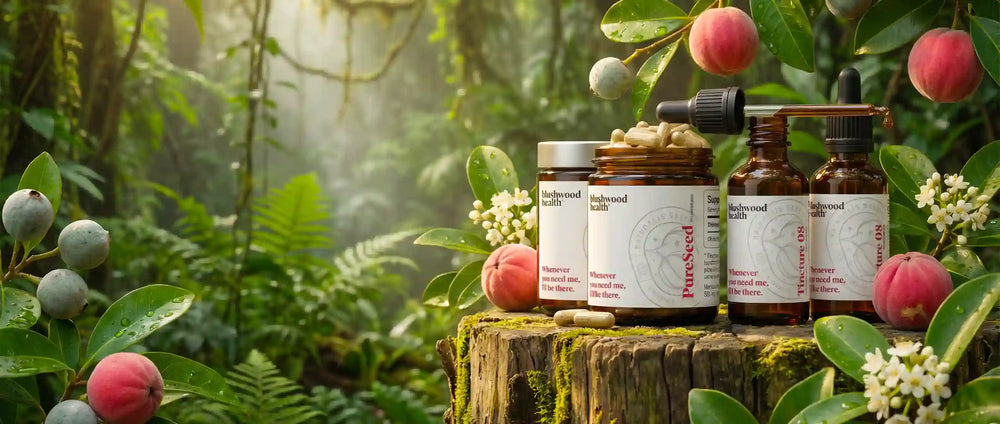
At Blushwood Health, we believe that nature offers some of the most elegant solutions for supporting your body’s innate defence systems. Our Tincture 08 delivers concentrated Blushwood Berry extract in a liquid format designed for sublingual absorption — allowing the active compounds to enter your system quickly and efficiently. For those who prefer the convenience of capsules, our PureSeed capsules (60 count) offer the same premium-quality extract in an easy-to-take daily format.
Every batch is independently lab-tested, and we are committed to transparency in everything we do. Because when it comes to protecting your cells, quality and trust matter just as much as the science.
These statements have not been evaluated by the Food and Drug Administration. This product is not intended to diagnose, treat, cure, or prevent any disease.
References
- Lobo V, Patil A, Phatak A, Chandra N. Free radicals, antioxidants and functional foods: Impact on human health. Pharmacogn Rev. 2010;4(8):118-126. PubMed
- Sies H. Oxidative stress: a concept in redox biology and medicine. Redox Biol. 2015;4:180-183. PubMed
- Liguori I, Russo G, Curcio F, et al. Oxidative stress, aging, and diseases. Clin Interv Aging. 2018;13:757-772. PubMed
- Nguyen T, Nioi P, Pickett CB. The Nrf2-antioxidant response element signaling pathway and its activation by oxidative stress. J Biol Chem. 2009;284(20):13291-13295. PubMed
- Scalbert A, Manach C, Morand C, Rémésy C, Jiménez L. Dietary polyphenols and the prevention of diseases. Crit Rev Food Sci Nutr. 2005;45(4):287-306. PubMed
- Moses RL, Boyle GM, Howard-Jones RA, et al. Activation of PKC supports the anticancer activity of tigilanol tiglate and related epoxytiglianes. Sci Rep. 2021;11(1):207. PubMed
- Pandey KB, Rizvi SI. Plant polyphenols as dietary antioxidants in human health and disease. Oxid Med Cell Longev. 2009;2(5):270-278. PubMed