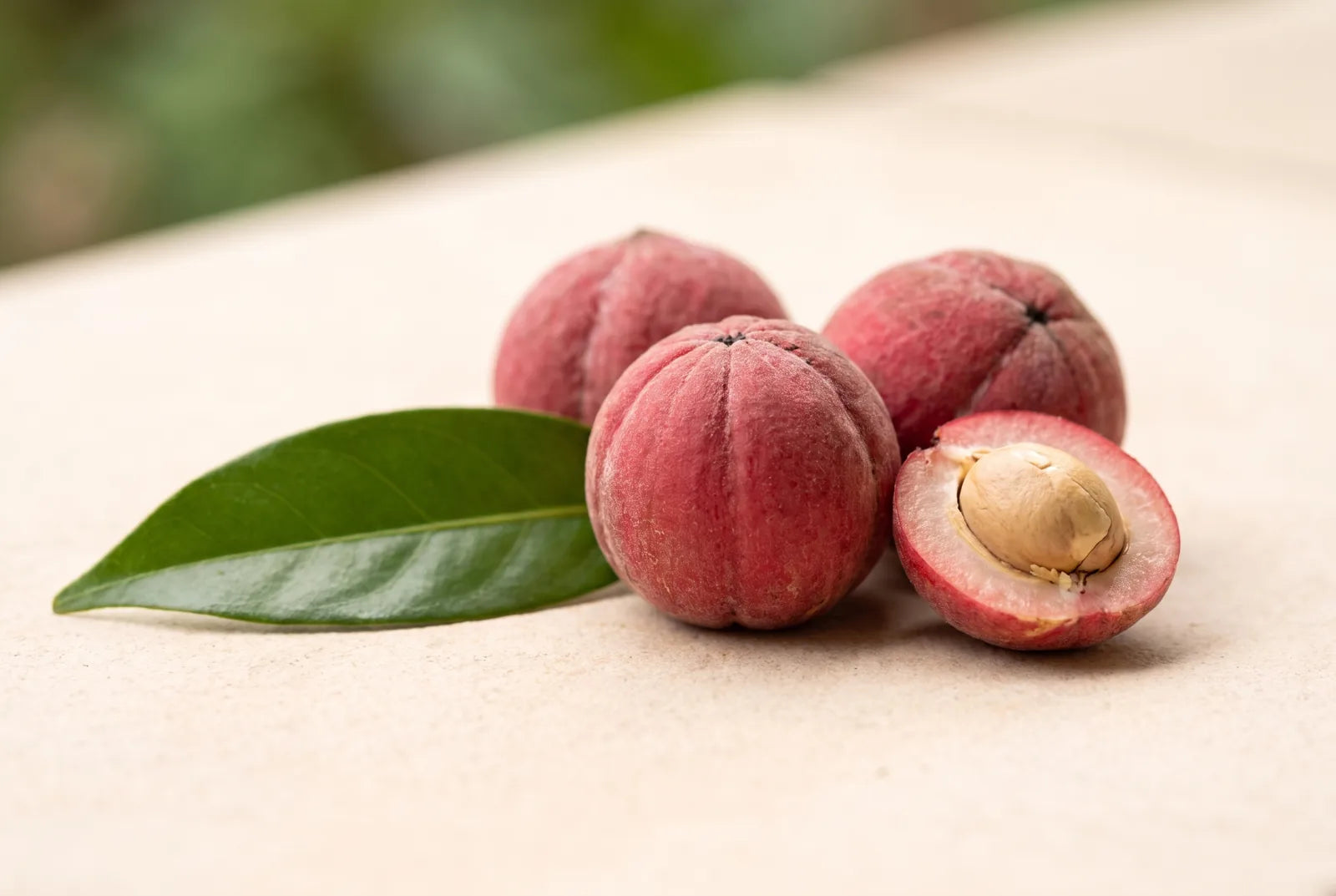
The blushwood berry is one of the rarest botanicals on earth, and the science around it is still being written. Here's what's actually known, what we test for, and what we're honest enough not to claim.
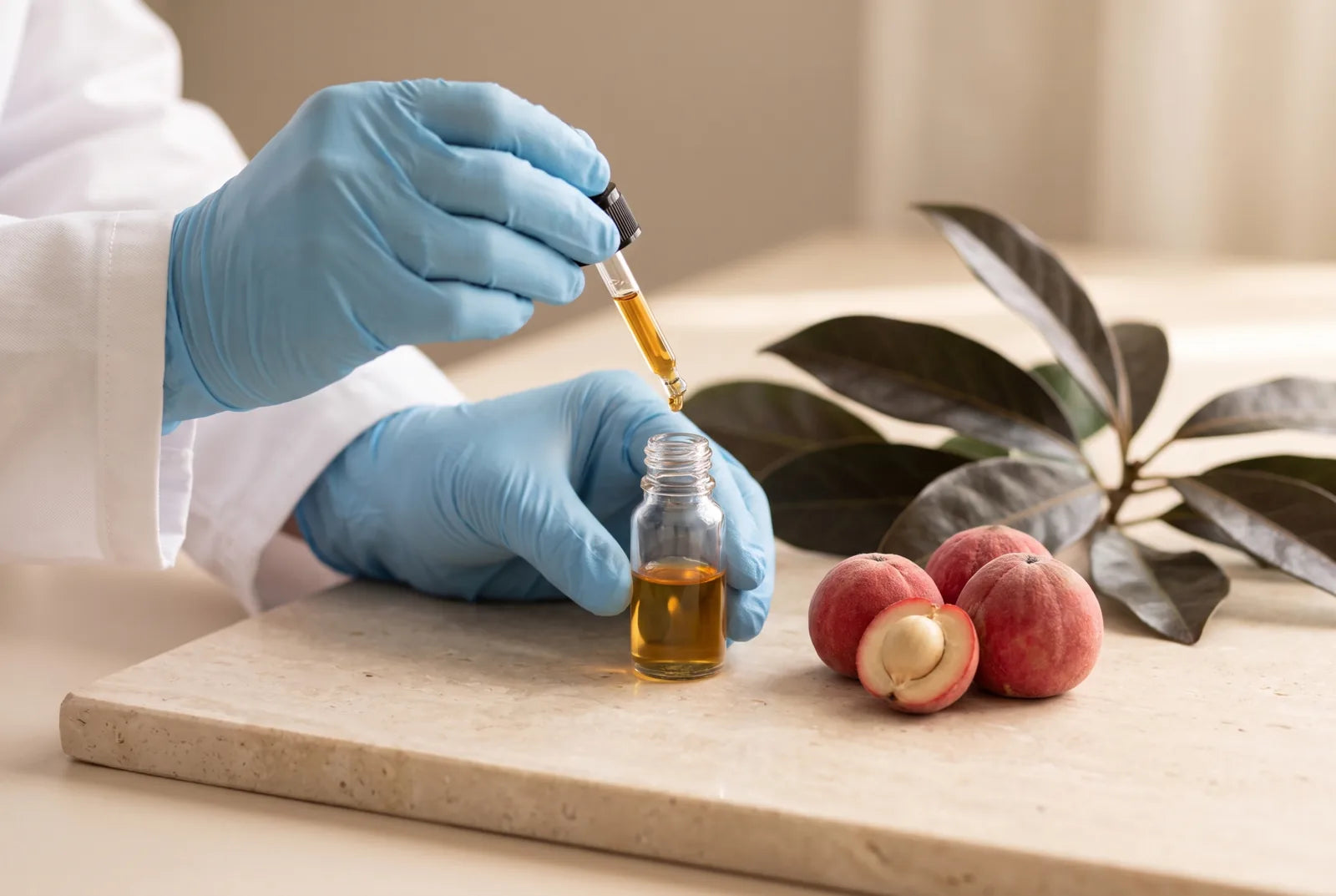
We're a botanical company, not a pharmaceutical one — and we hold ourselves to an evidence-first, radically transparent standard. We tell you exactly what's in the whole seed, we have every batch independently tested, and we're honest that the science on this rare plant is still early.
No overclaiming. No borrowed authority. Just the honest state of the science, laid out plainly.
Because we use the whole seed of the berry, the extract carries the plant's full natural profile. Here are the compound classes published analysis describes — and what research studies each of them for. Every source is linked for you to read yourself.
Polyphenols are a large family of naturally-occurring plant compounds, found across fruits, vegetables, tea and seeds. They're dietary antioxidants — compounds that help neutralise free radicals — and one of the most-studied families in modern nutrition. Specific polyphenols (such as resveratrol) have been shown in controlled trials to lower markers of inflammation, and polyphenol-rich diets are studied in relation to cardiovascular and metabolic health.
The whole blushwood seed carries its own natural polyphenol content.
Flavonoids are a major subgroup of polyphenols, found throughout the plant kingdom — in berries, citrus, cocoa and tea — and known for their antioxidant activity. They're among the most robustly evidenced polyphenols for heart health: in large population studies, higher dietary flavonoid intake is consistently associated with lower cardiovascular risk, and specific flavanols (such as those in cocoa) are recognised by European food-safety regulators for helping maintain normal blood flow.
Because we use the whole seed, the extract carries the seed's natural fatty acids. Fatty acids are one of the body's main sources of energy, and dietary fats help it absorb fat-soluble compounds — both well-established roles. Essential fatty acids are also recognised as important for normal bodily function.
Fontainea picrosperma contains a family of naturally-occurring diterpene esters, known as epoxytiglianes — compounds distinctive to this plant. Beyond identifying them, peer-reviewed research has studied epoxytiglianes for their effects on skin and their role in wound healing and tissue repair.
This is a large part of why the plant draws serious scientific attention. We share it as honest information about the botanical — not as a claim about what our food supplement does. The research is active and ongoing, and we advocate for more of it.
The information below is general education about these compound classes as they occur across plants and the diet — it is not a statement about what Blushwood Health's product does. See the note at the foot of this page.
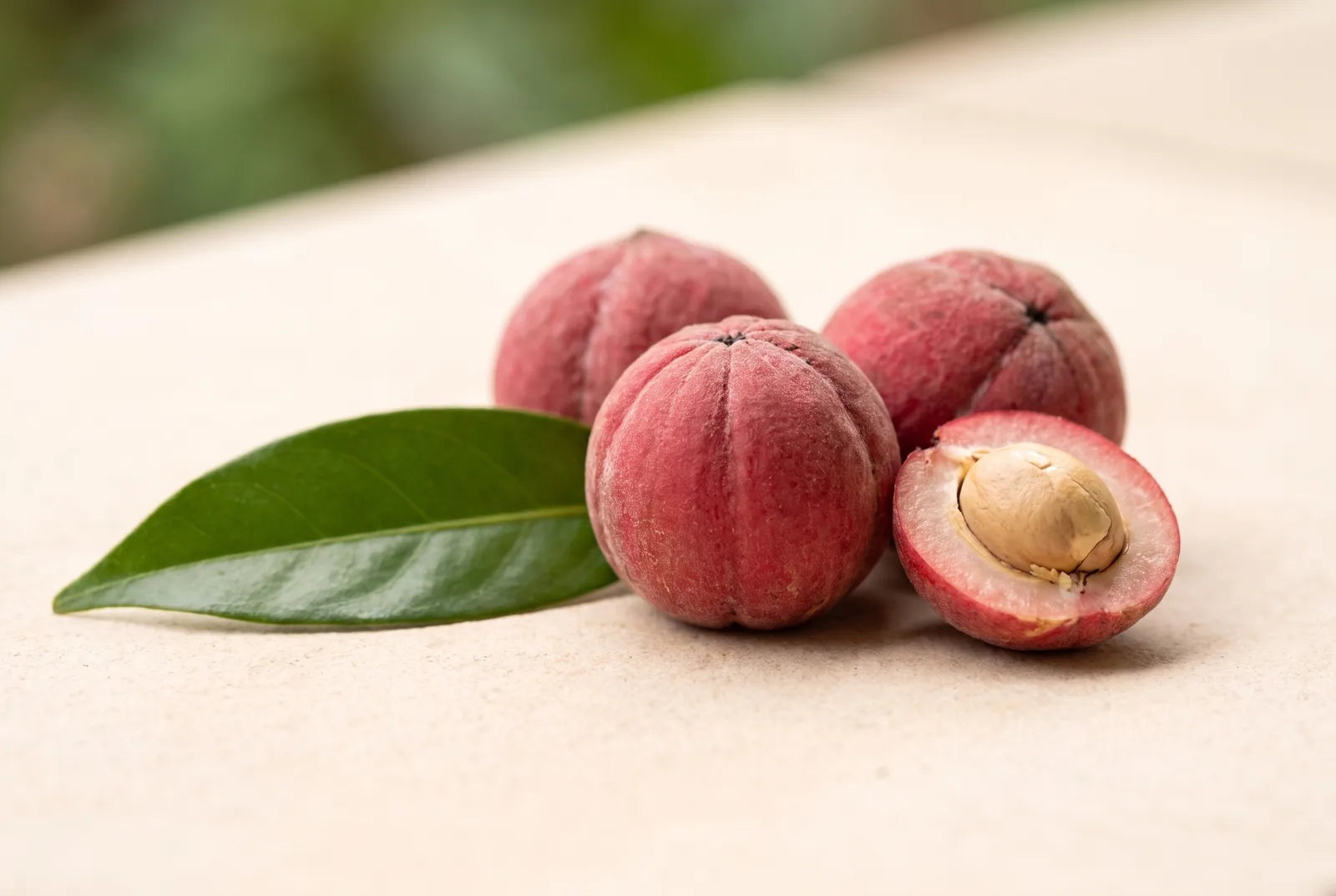
Where others chase a single isolated molecule, we do the opposite. Blushwood Health uses a whole-seed extract, concentrated 10:1 — the complete natural profile of the seed, not one compound pulled out of context.
It's a simpler, more honest idea: keep the plant whole, test it thoroughly, and let the whole seed be what it is.
We can't tell you the berry's story is finished — but we can prove exactly what's in the bottle. This is the science we own.
Every batch is independently tested by Eurofins for heavy metals and microbiology, with a Certificate of Analysis available.
Produced to Good Manufacturing Practice (GMP) and ISO certified quality standards.
A whole-seed extract concentrated 10:1 — the whole seed, nothing isolated. The fruit itself is not used: read seed vs fruit.
Vegan and gluten-free, with no added sugar or fillers. What's on the label is what's inside.
The milled whole seed is extracted by percolation, one slow continuous pass rather than steeping, then concentrated 10:1.
A growing body of peer-reviewed research is beginning to map the blushwood berry's compound profile. We're not a pharmaceutical company, and we make no disease claims. What we do is openly advocate for more of this research — so the full picture can be understood.
Being a pioneer means being comfortable at the frontier, where the questions are still being written. You're early. That's the point.
Trust is built as much by what a brand refuses to say as by what it claims. So, plainly:
No — and we won't claim it is. The science on the blushwood berry is still early-stage. We focus on what we can stand behind: a whole-seed extract with a transparent composition, independently tested by Eurofins.
Published analysis of the whole seed of Fontainea picrosperma describes polyphenols, flavonoids, natural fatty acids, and a family of naturally-occurring diterpene esters (epoxytiglianes) distinctive to the plant.
No. Blushwood Health makes a food-grade, whole-seed botanical extract — not a pharmaceutical, and not an isolated molecule. We make no disease claims.
Every batch is independently tested by Eurofins for heavy metals and microbiology, produced to GMP and ISO certified standards, with a Certificate of Analysis available.
Because it's true. Research into the blushwood berry is still in its early stages. Rather than overclaim, we're honest about that — and we advocate for further study to establish the full picture. See what verified customers praise it for in our guide to blushwood berry extract benefits.
*These statements have not been evaluated by the Food and Drug Administration. This product is not intended to diagnose, treat, cure, or prevent any disease.
Whole-seed Blushwood Berry Extract — tincture, capsules, or the complete bundle. Lab-tested, honestly made, and built to take for the full 90 days.

Two tinctures + two capsule jars — a four-month supply of the whole-seed ritual.
 Whole-seed liquid

A 10:1 whole-seed extract in a coconut-glycerin base. Three honest ingredients.
Taste-free

The same whole-seed extract, in easy, taste-free capsules.
